The power problems we solve for grid operators
Capacity outpaced by load
Demand is outpacing new generation and T&D. Interconnection queues are backing up behind infrastructure that wasn't built for this level of load.
Congestion stranding power
Transmission and distribution feeders hit thermal limits before generation can reach the load. Expensive spot-market purchases near the constraint and curtailment on the wrong side of it become the default.
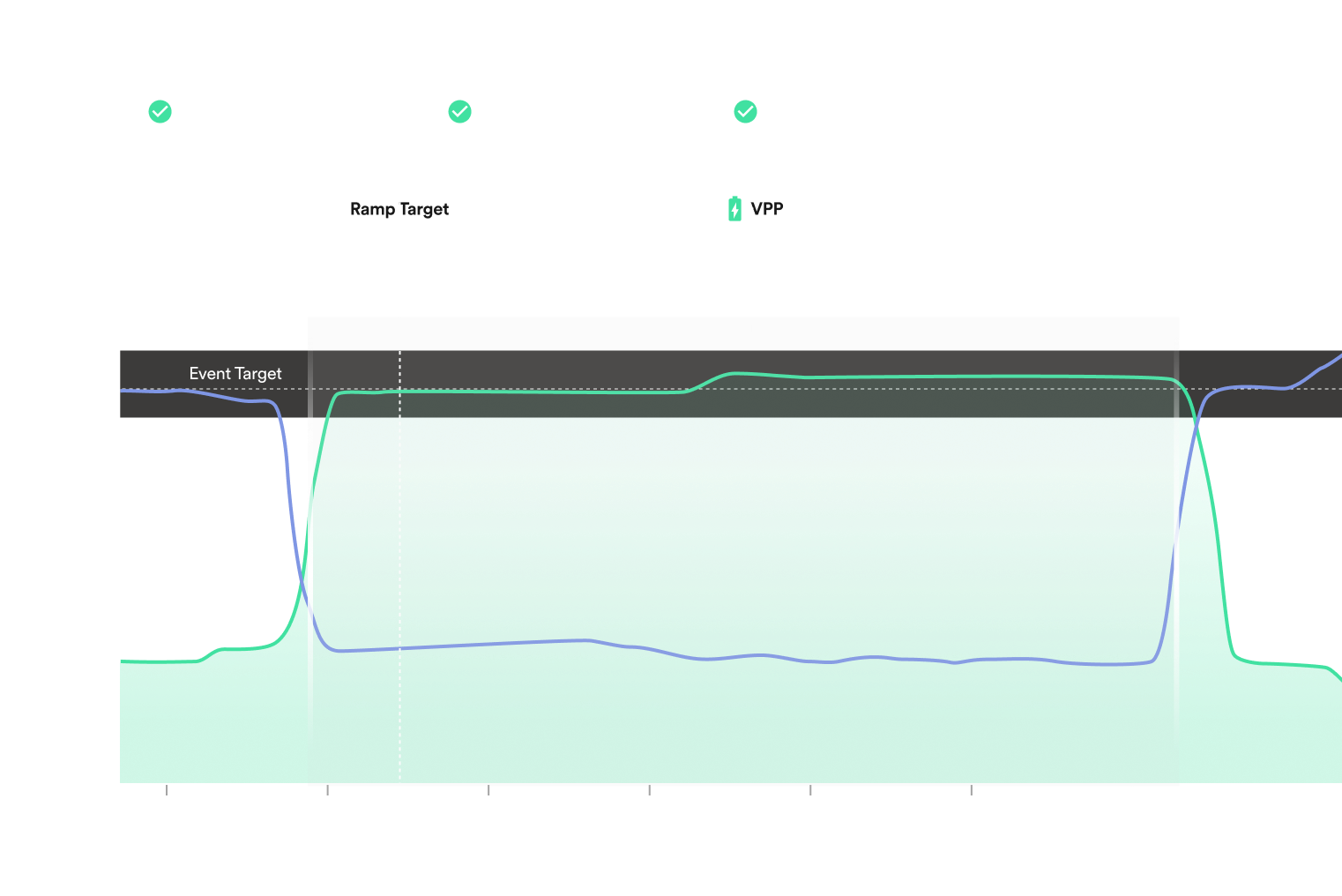
Peaks outpacing traditional demand response
Curtailment-based programs depend on customer behavior, deliver slow and unverified response, and don't scale with growing peaks.
Frequency and voltage at the edge
Thermal generators retire faster than planned, frequency deviations propagate more quickly, and voltage quality degrades first at the distribution edge — where centralized resources can't reach.
One platform replaces a patchwork of disjointed solutions
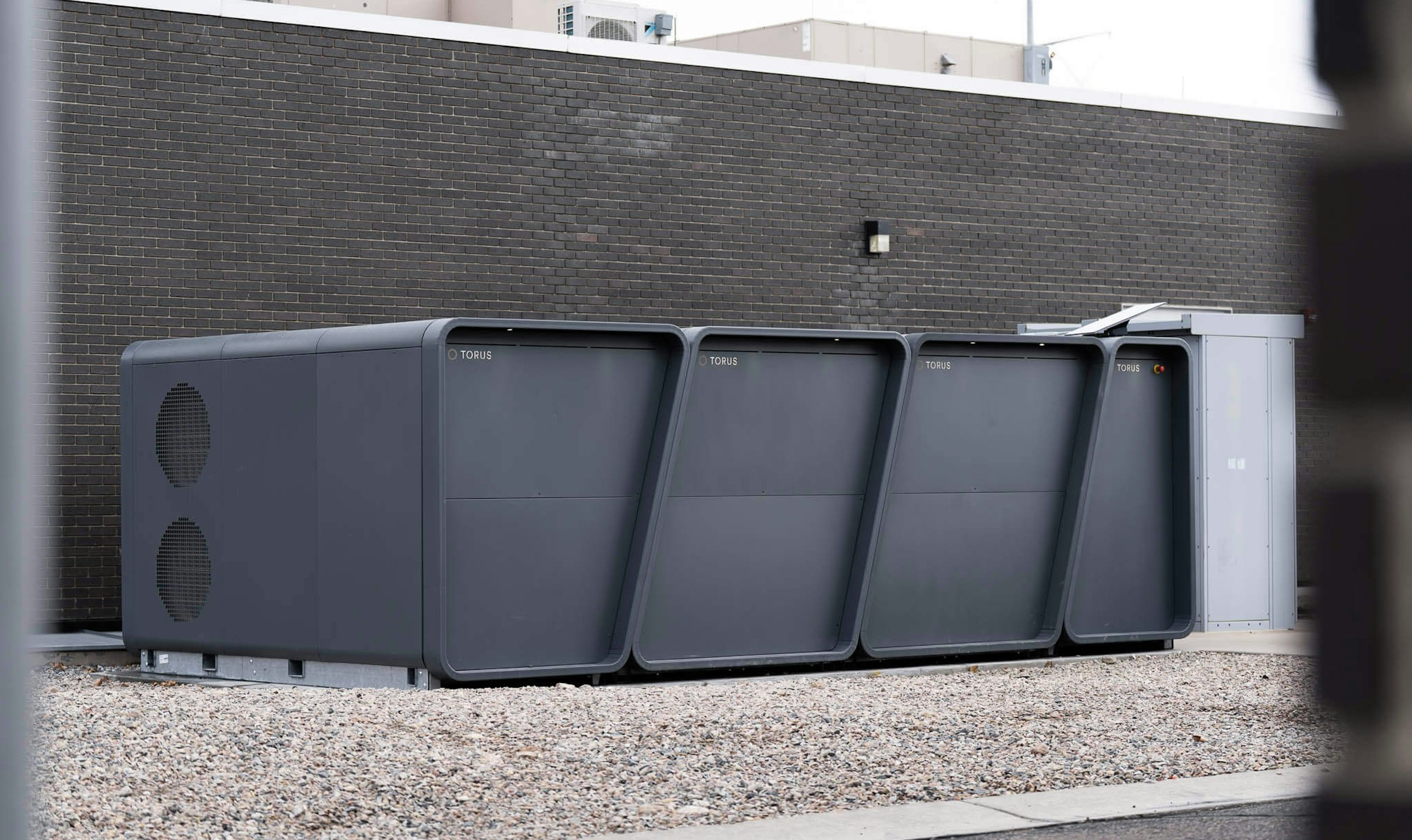
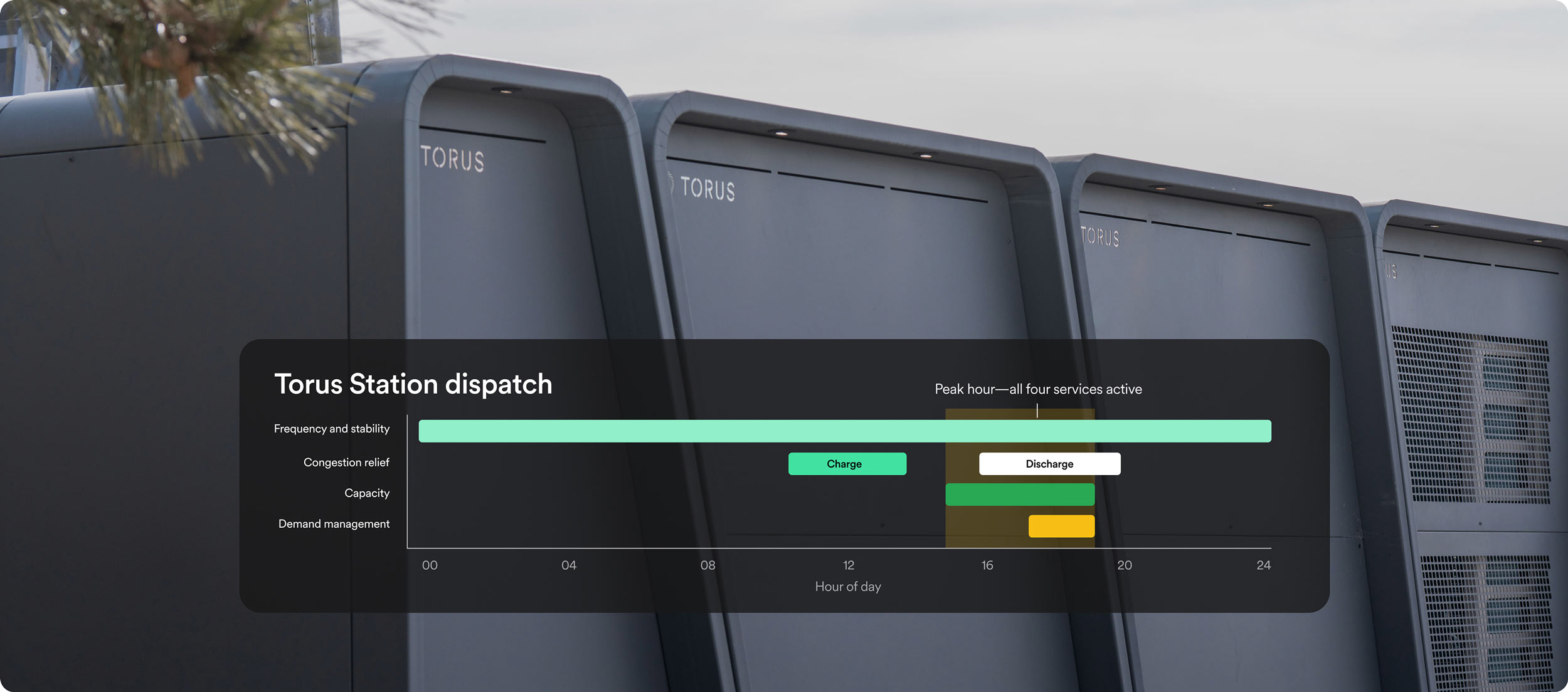
Grid operators manage frequency response, demand programs, congestion, and long-duration capacity through separate vendors with separate systems. Torus consolidates key services into one vertically integrated platform— hardware, software, cybersecurity, monitoring, and lifetime maintenance integrated directly into your existing EMS and SCADA.
Move power more efficiently through existing wires
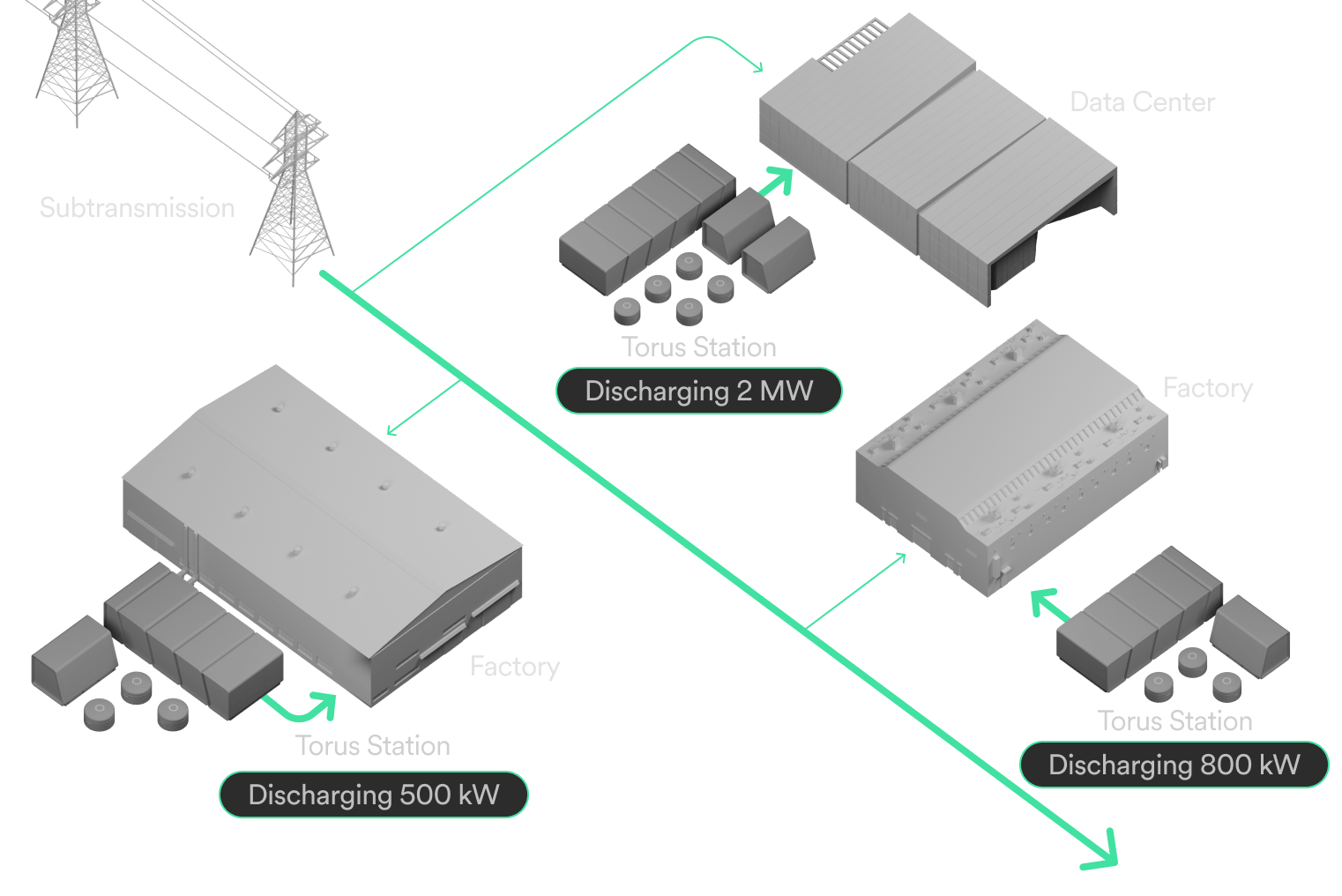
Storage at the point of load discharges into constrained areas the grid can't reach; storage at renewable interconnection points absorbs variable output before it stresses wires downstream. Congested corridors carry more useful power without new transmission.
Add capacity on the timeline load is growing
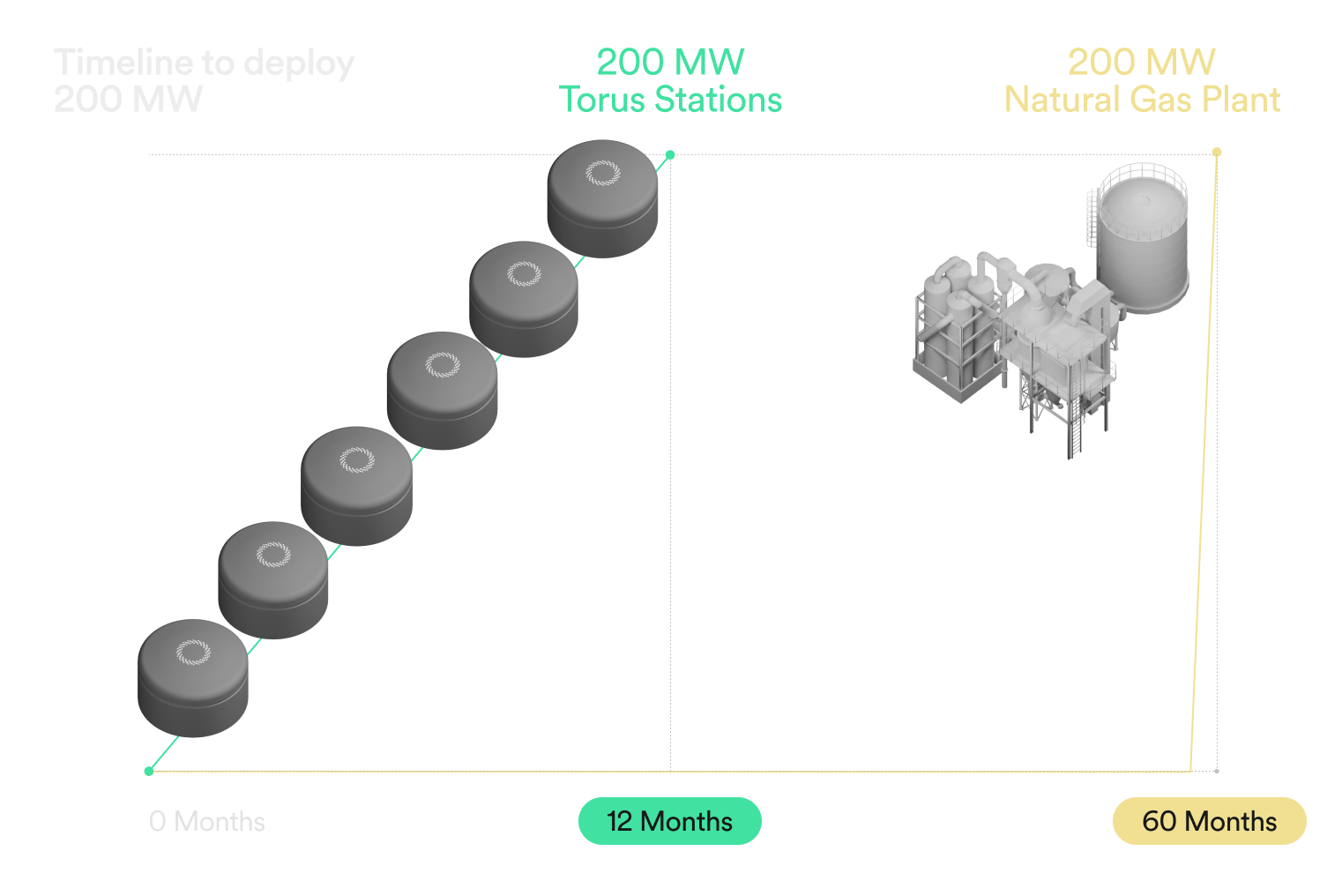
Torus installs behind the meter or at substations and distribution nodes in 12-16 weeks, deferring multi-year wires and generation projects. Modular sizing matches what the circuit needs today — and if load growth shifts, assets redeploy to the next constraint.
Frequency and voltage support for the distribution layer
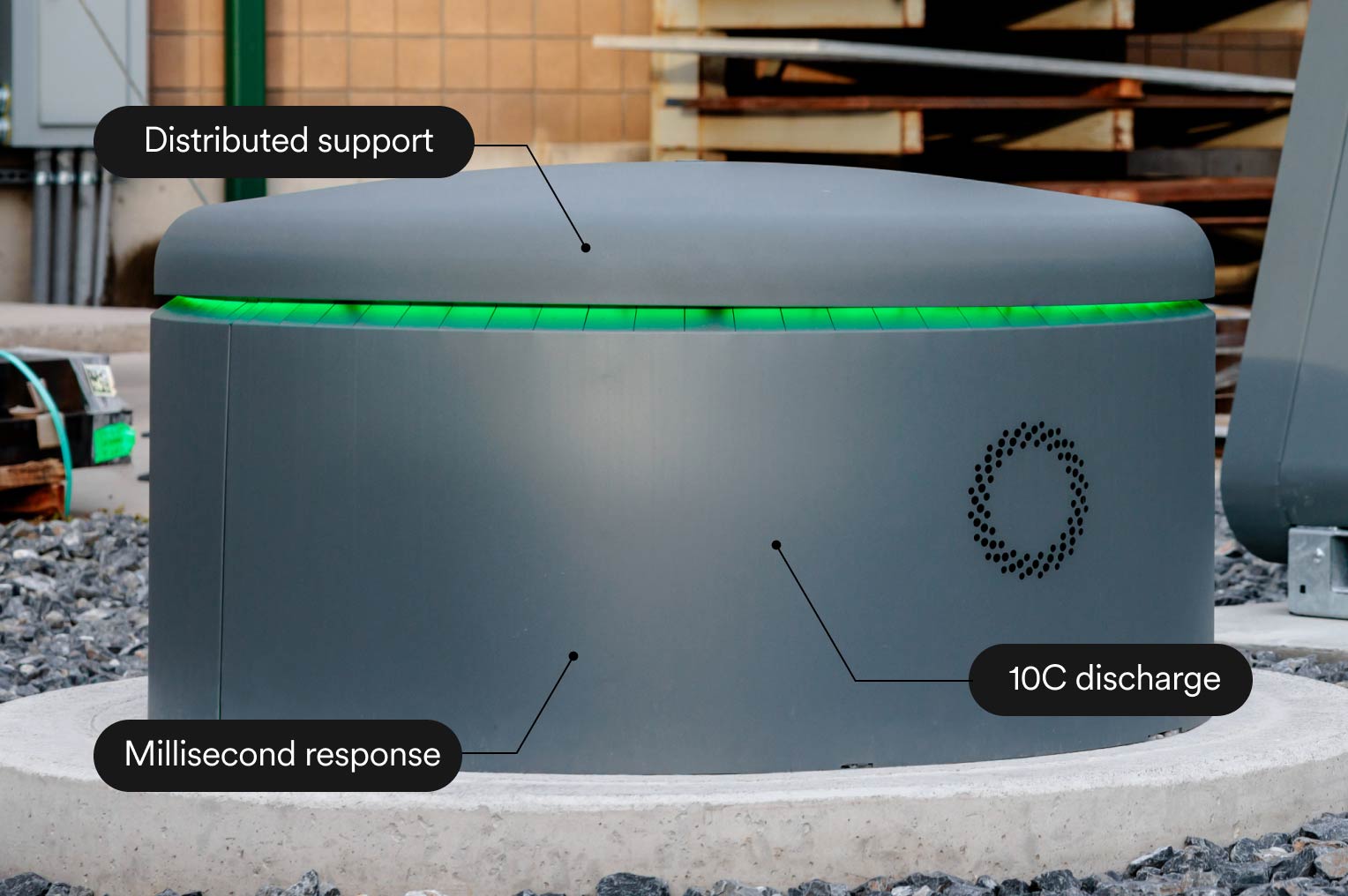
Torus corrects frequency deviations in milliseconds at a 10C discharge rate — 20x the power density of a typical battery. The same installation provides reactive power for voltage support at end-of-line feeders and customer sites, where power quality degrades first.