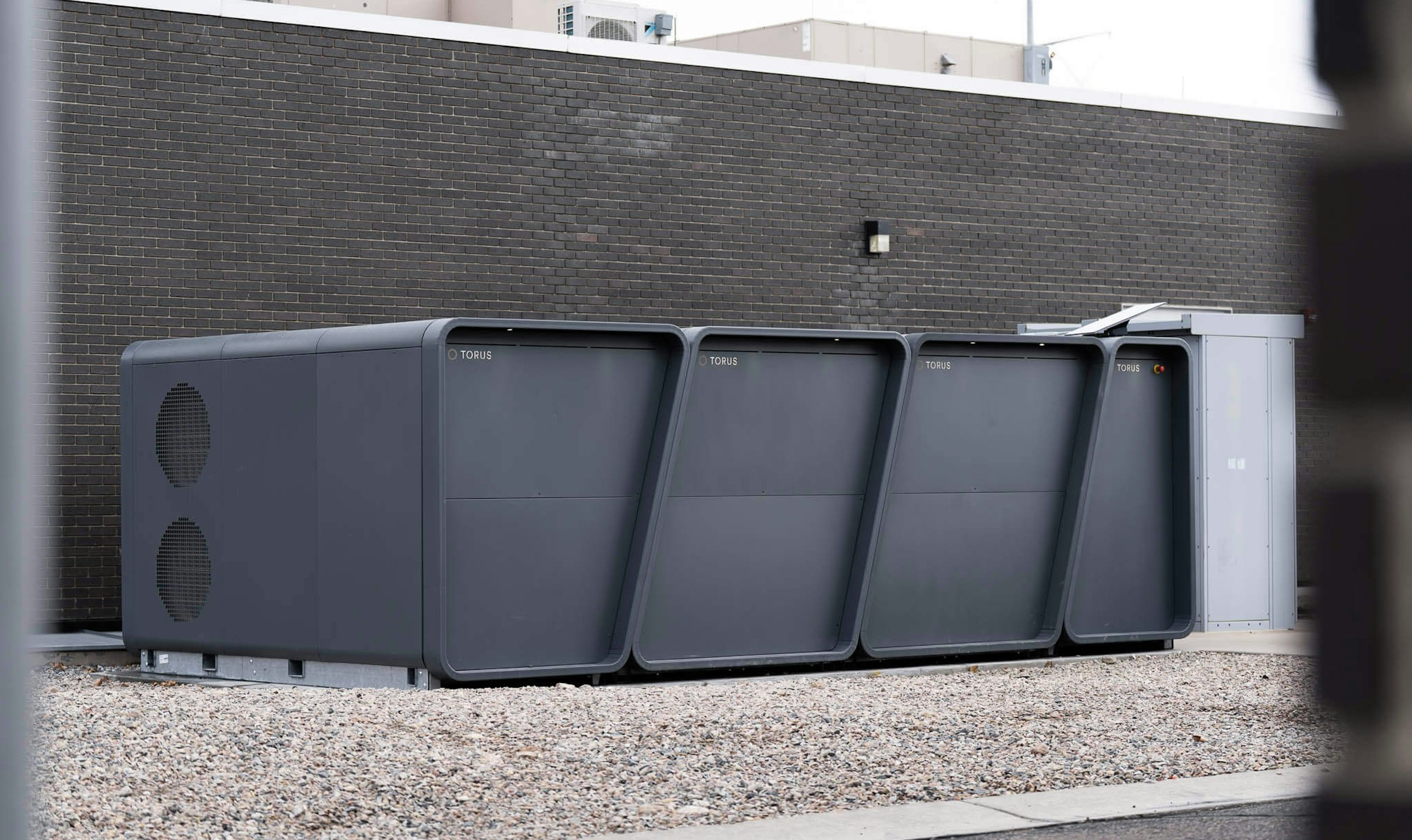
Alleviate bottlenecks on your grid
When transmission hits its limits faster than new lines can be built, operators buy expensive generation near the load or curtail renewables on the wrong side of the constraint. Torus sits at the point of need, absorbing and dispatching energy on either side of the bottleneck — no new lines required.
1
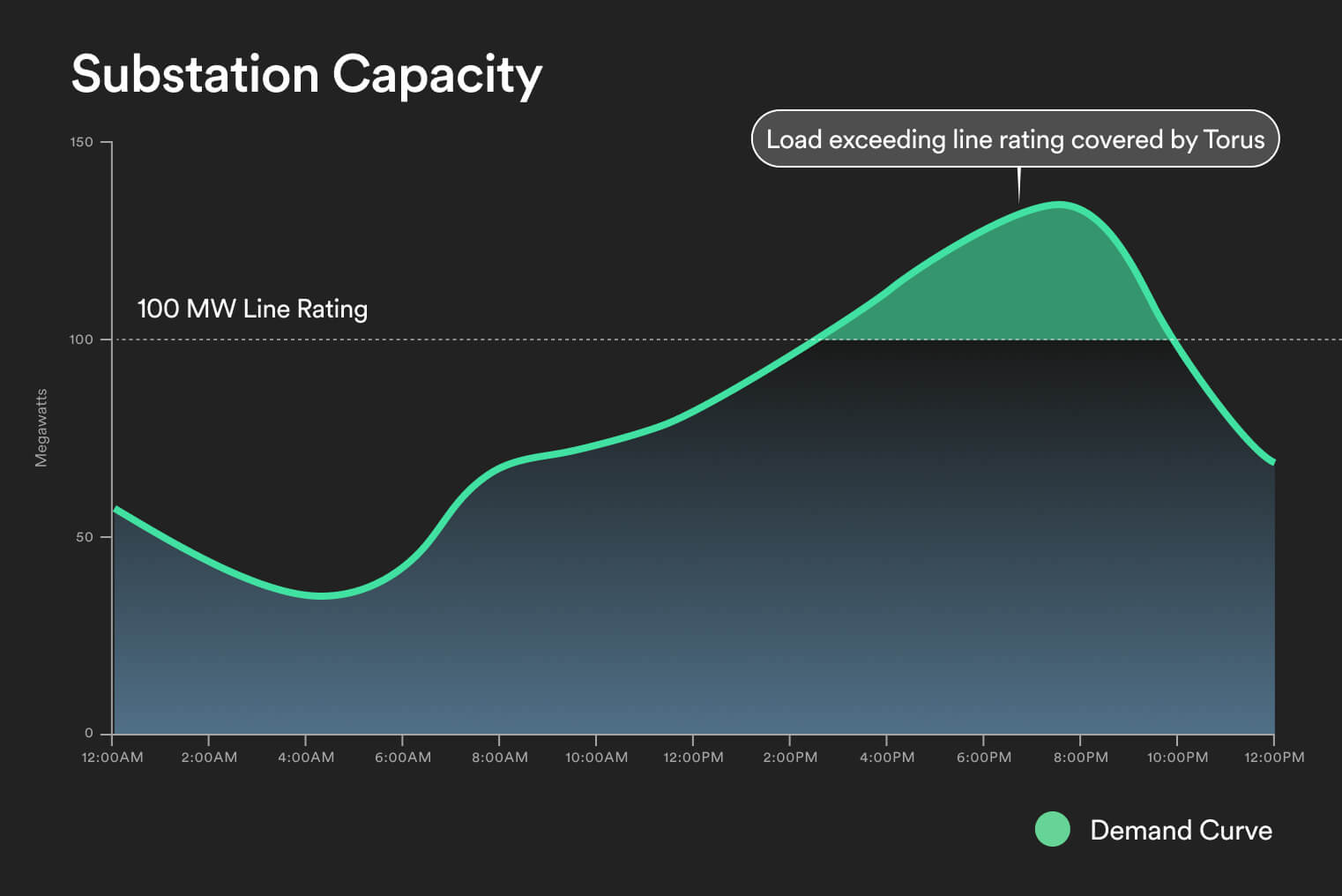
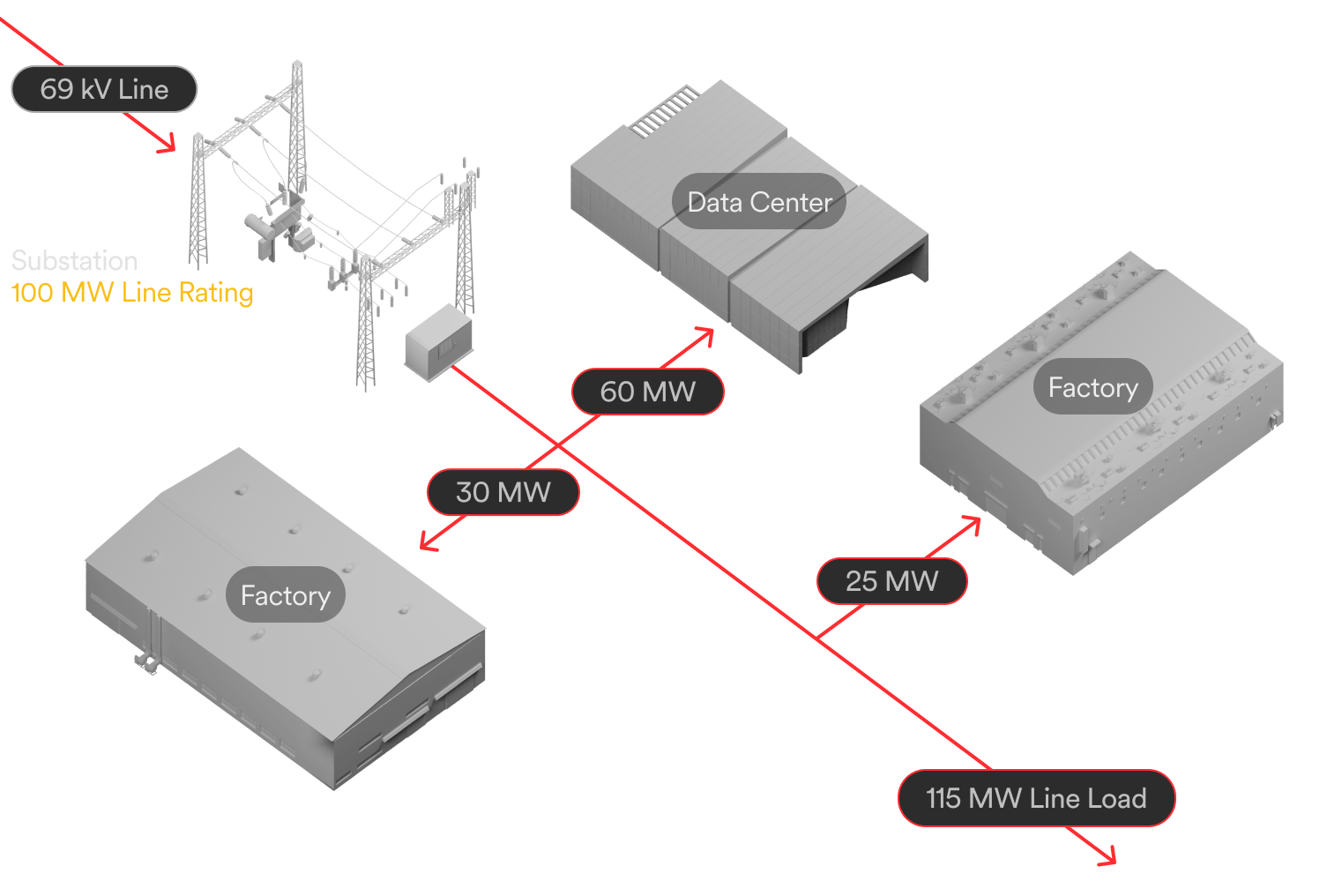
Operations and trading desks identify where congestion limits power delivery
Real-time bottlenecks on transmission lines, congestion at renewable-heavy interconnection points, and load pockets that pull expensive spot-market generation. Siting decisions target those exact locations — not centralized facilities that push power across the same congested wires.
2
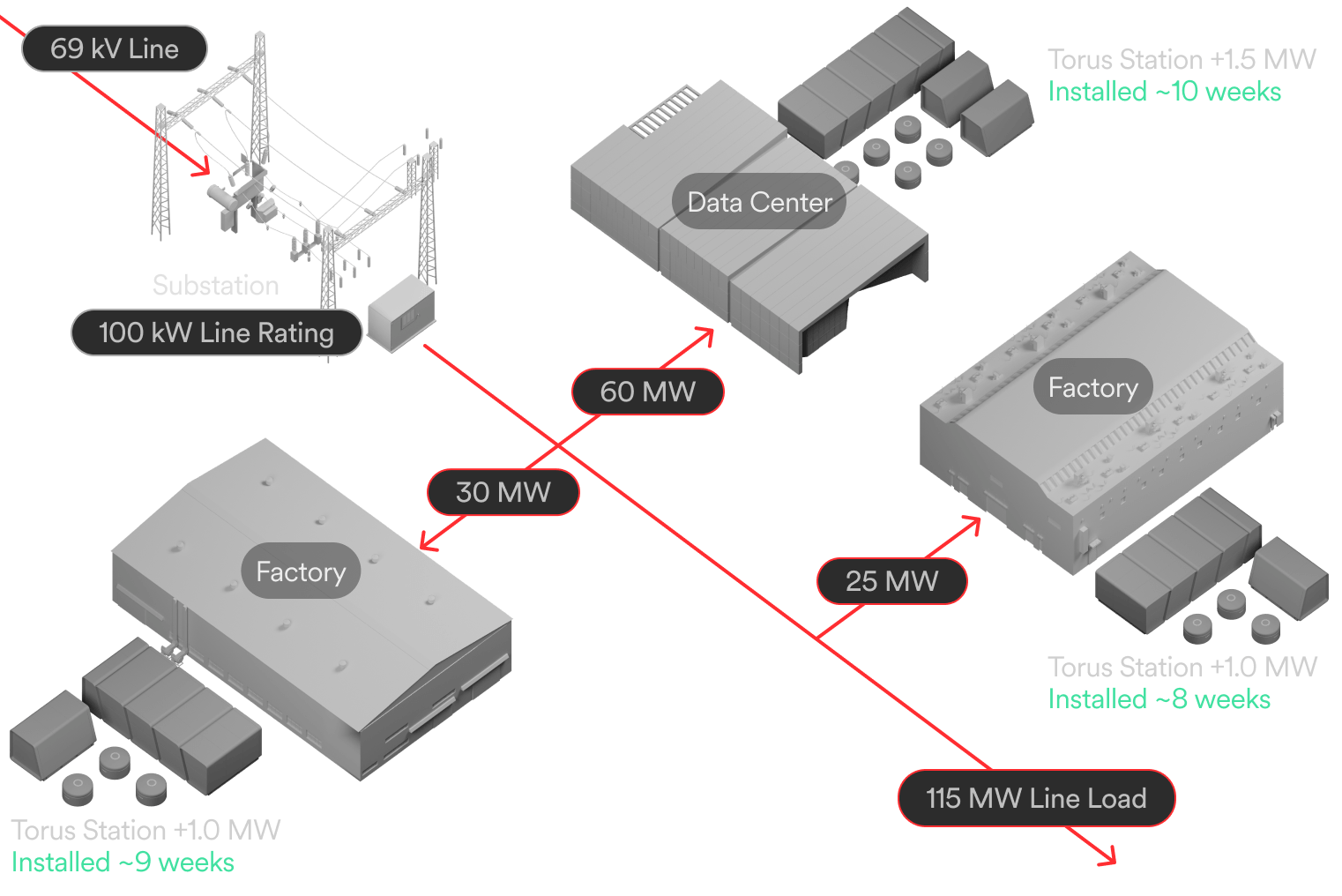
Torus deploys at the point of load and generation interconnection points
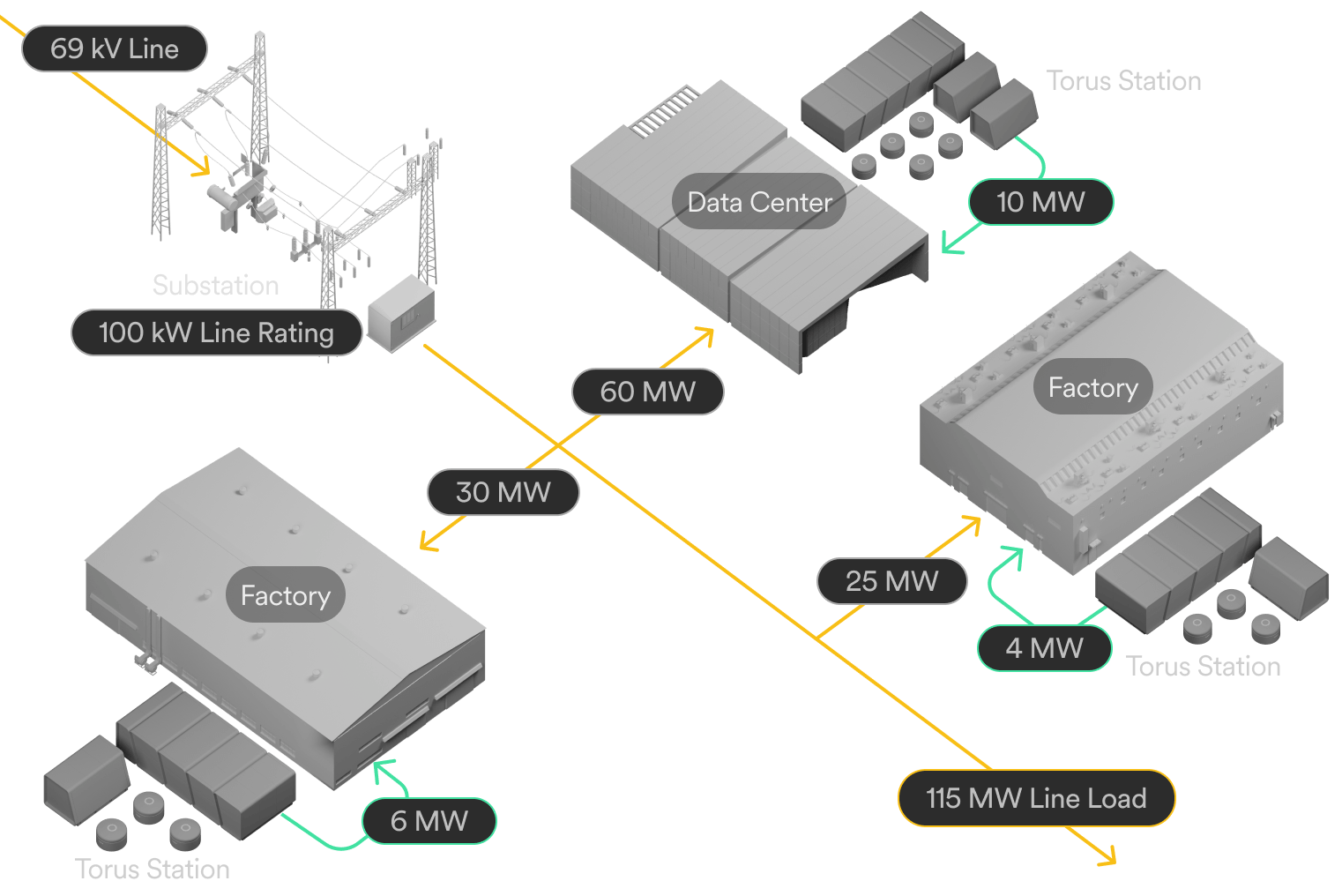
Behind the meter at customer sites within congested load pockets, in front of the meter at substations, distribution nodes, and renewable interconnection points. Storage sits where the grid is constrained.
3
The system shapes load and firms generation as the grid calls
Large utilities send real-time dispatch signals to specific zones; smaller utilities and co-ops let Torus schedule against forecasts through Torus Lasso. In both modes, the system charges when local generation exceeds what wires can carry and discharges into load when transmission can't deliver it.
4
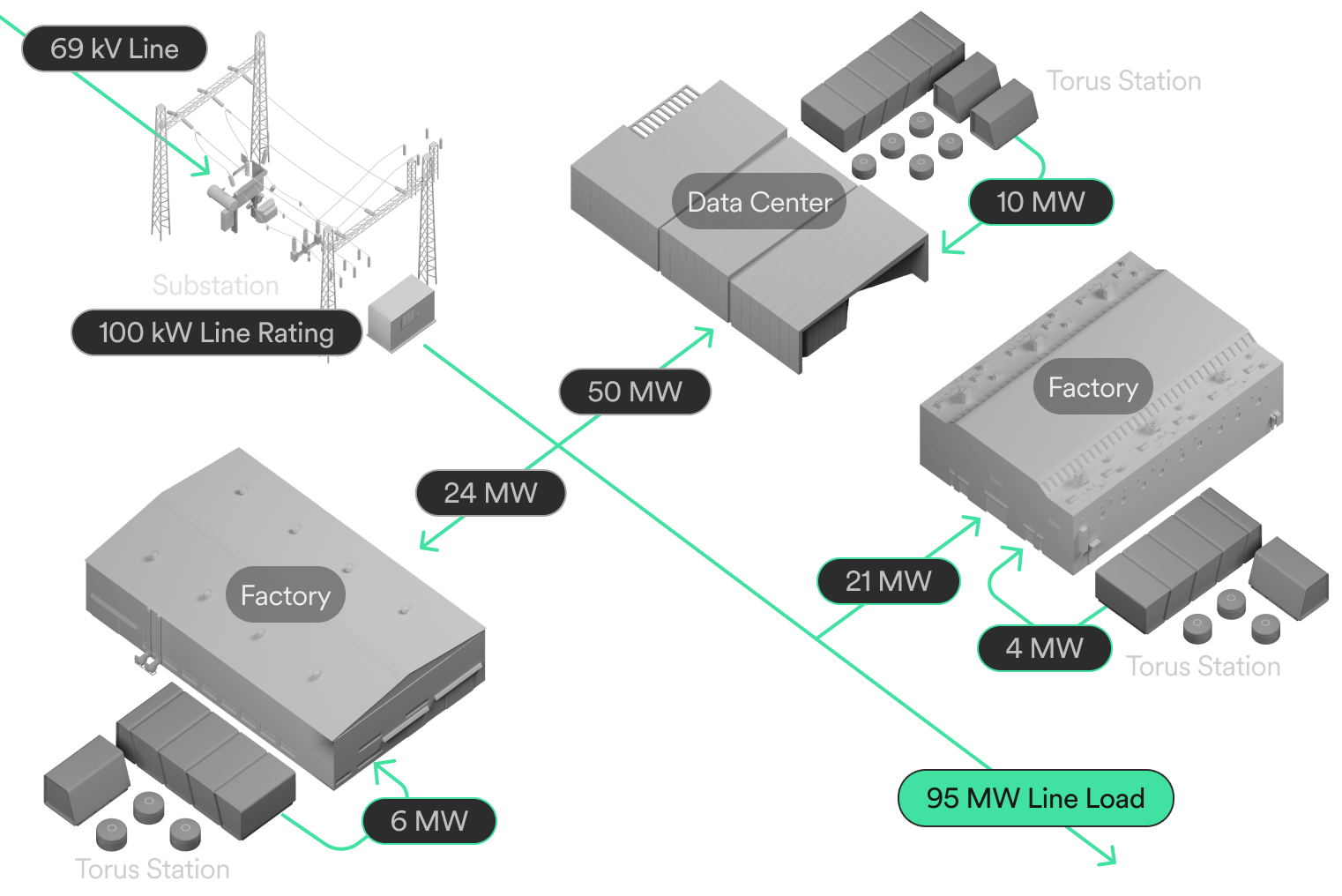
Existing wires move power more efficiently
Renewable curtailment falls. Spot-market generation near constrained nodes falls. Behind-the-meter assets continue serving the host facility between dispatch events — peak shaving, voltage protection, and load management that strengthens the utility's customer relationship.