Don’t let interconnection queues bottleneck development
The gap between available power and project requirements shouldn’t set your construction schedule.
Bring your own capacity
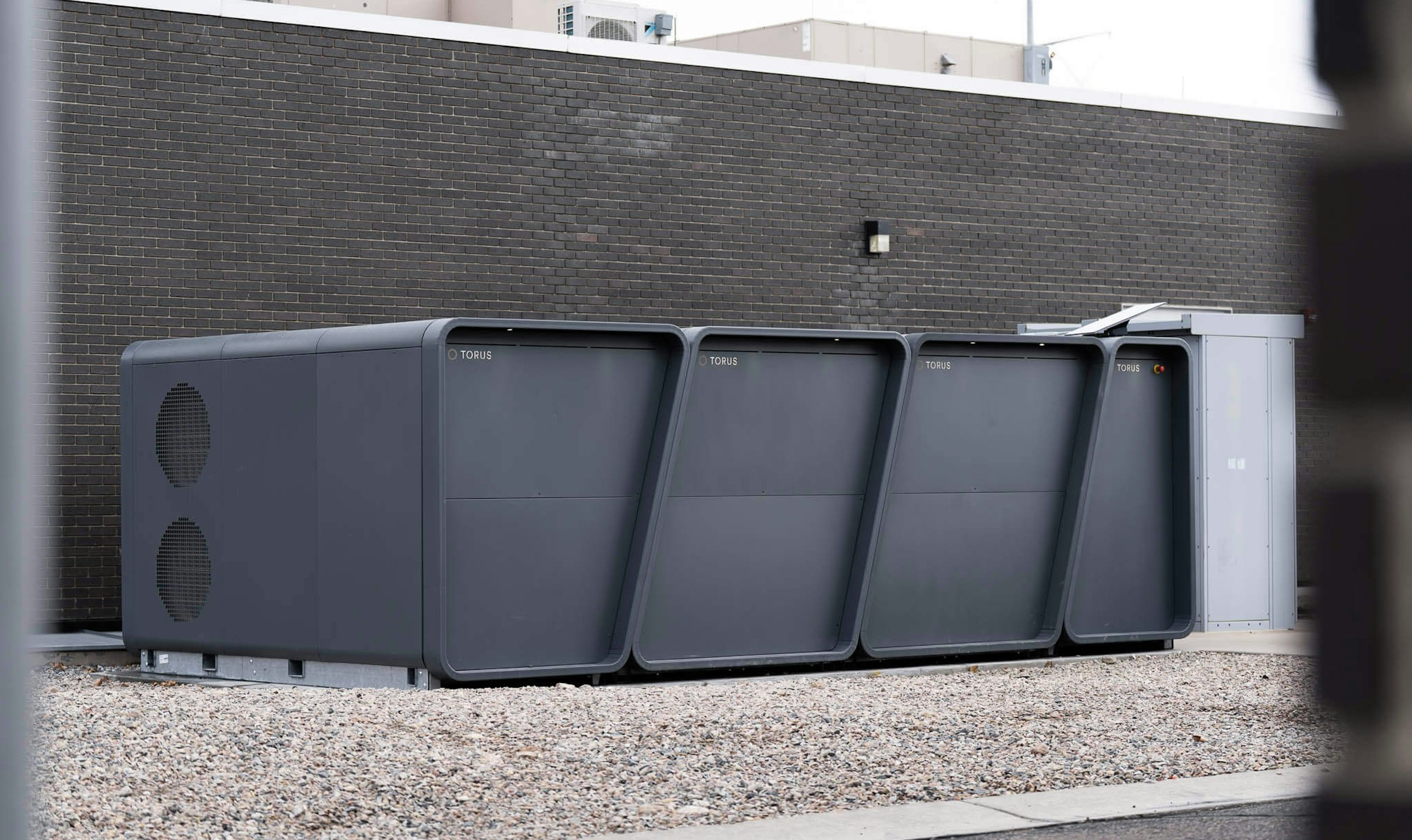
Install on-site stored capacity to supplement your utility connection. When facility demand exceeds the contracted limit, stored energy fills the gap.
1
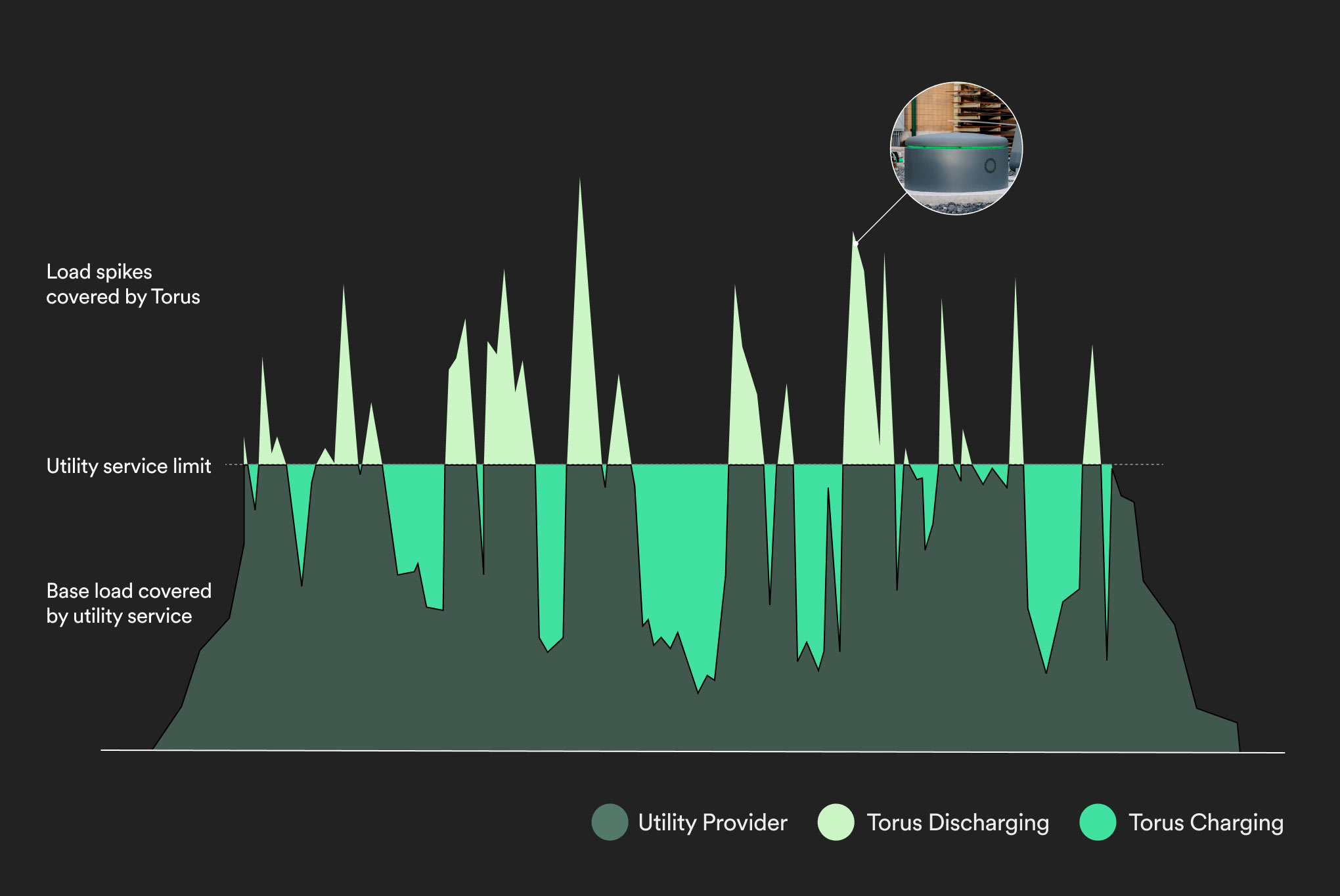
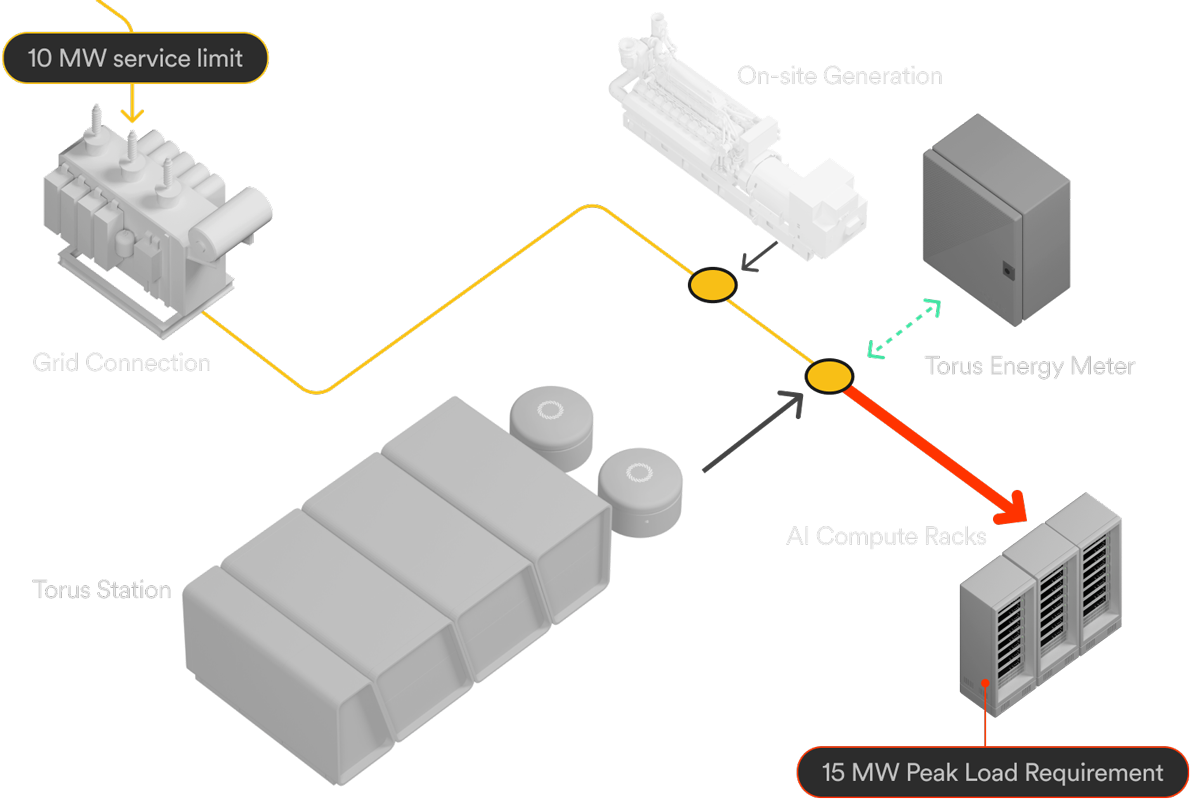
Torus maps the gap between available power and project requirements
Whether the constraint is a utility service limit, an interconnection queue, or a generation fleet that cannot cover peak demand, the starting point is understanding exactly how much capacity the project needs and when.
2
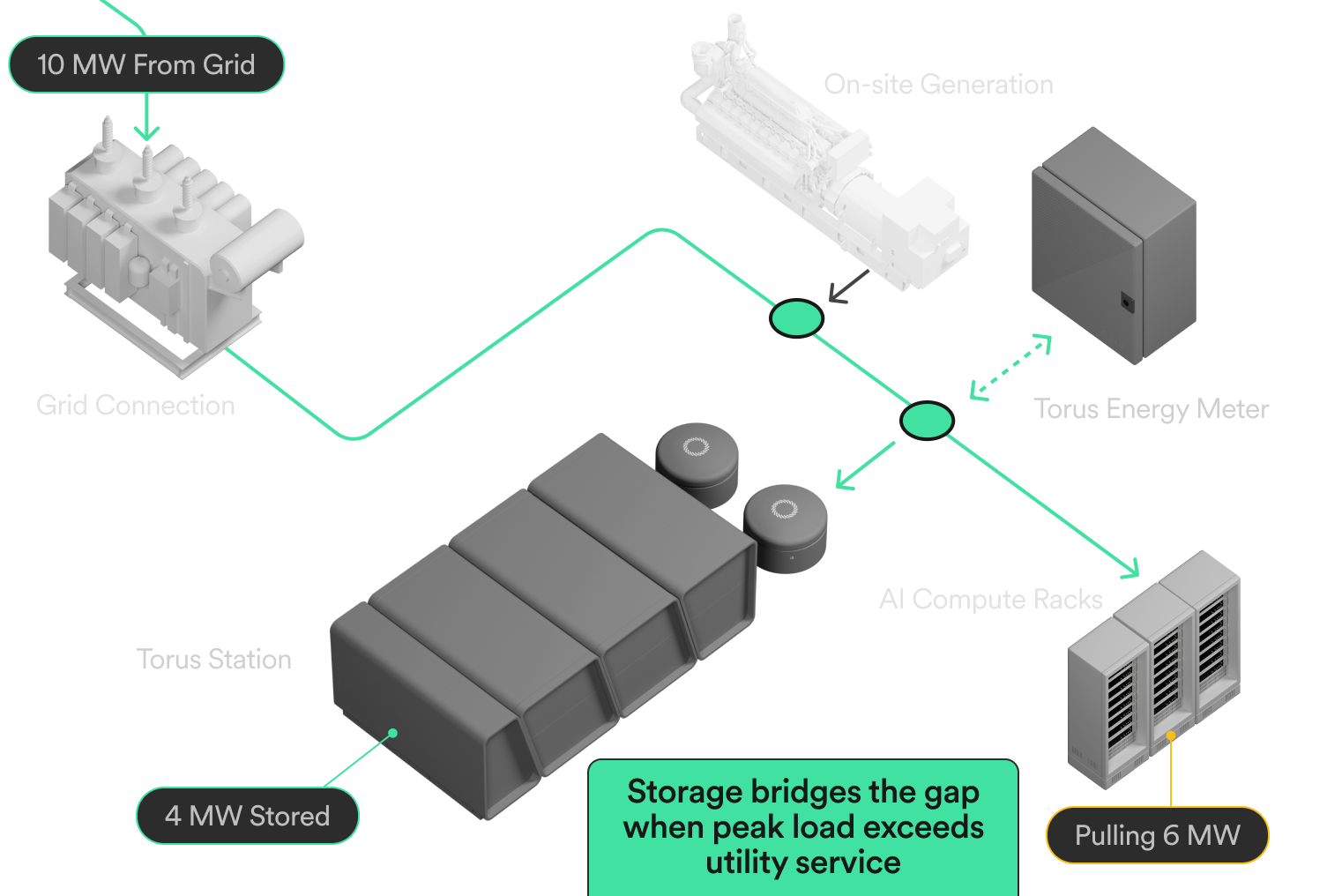
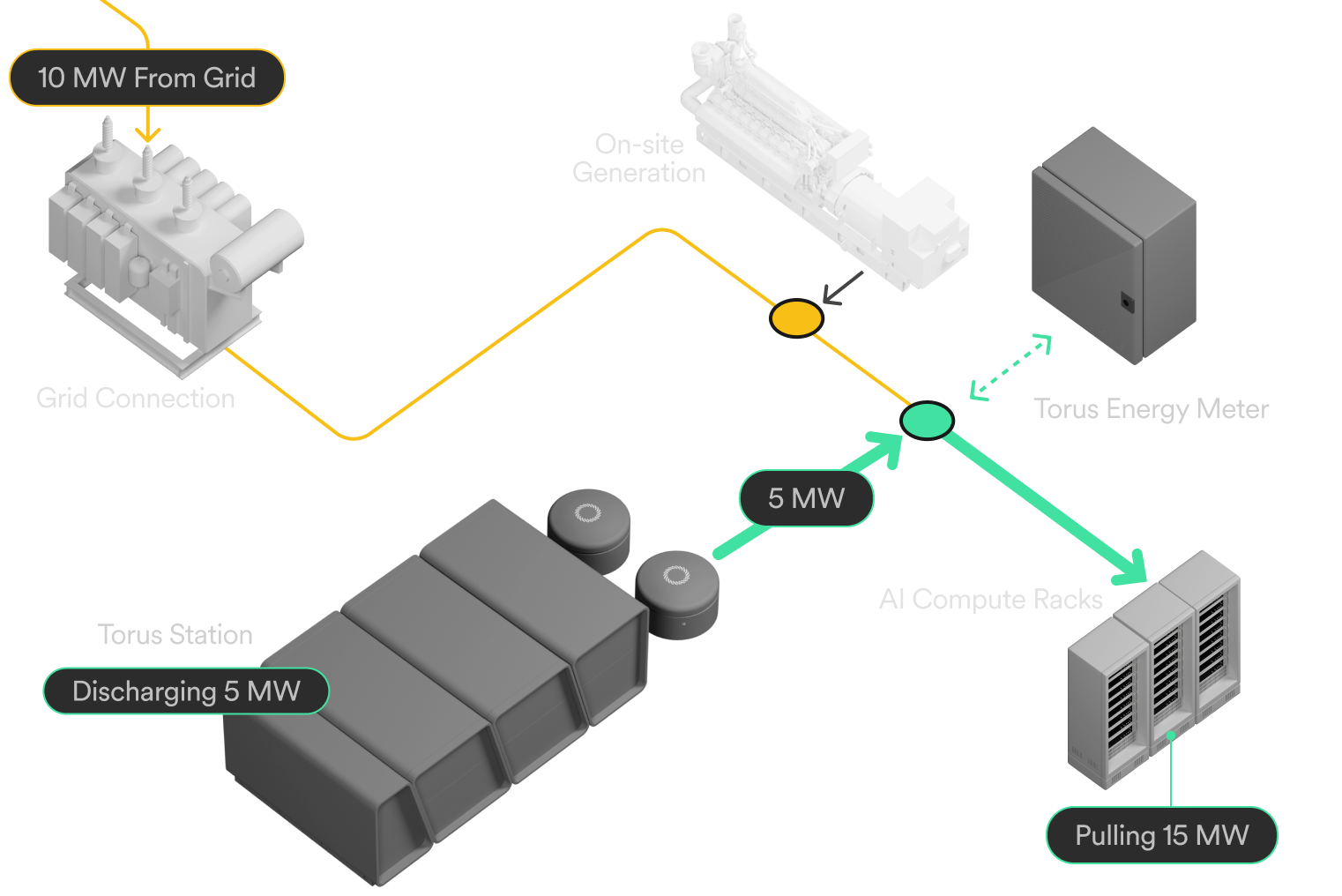
On-site storage expands your usable power envelope
The system charges during periods of low facility demand. When load exceeds the utility connection or generation capacity, stored energy responds in milliseconds — creating real, usable headroom above the existing supply.
3
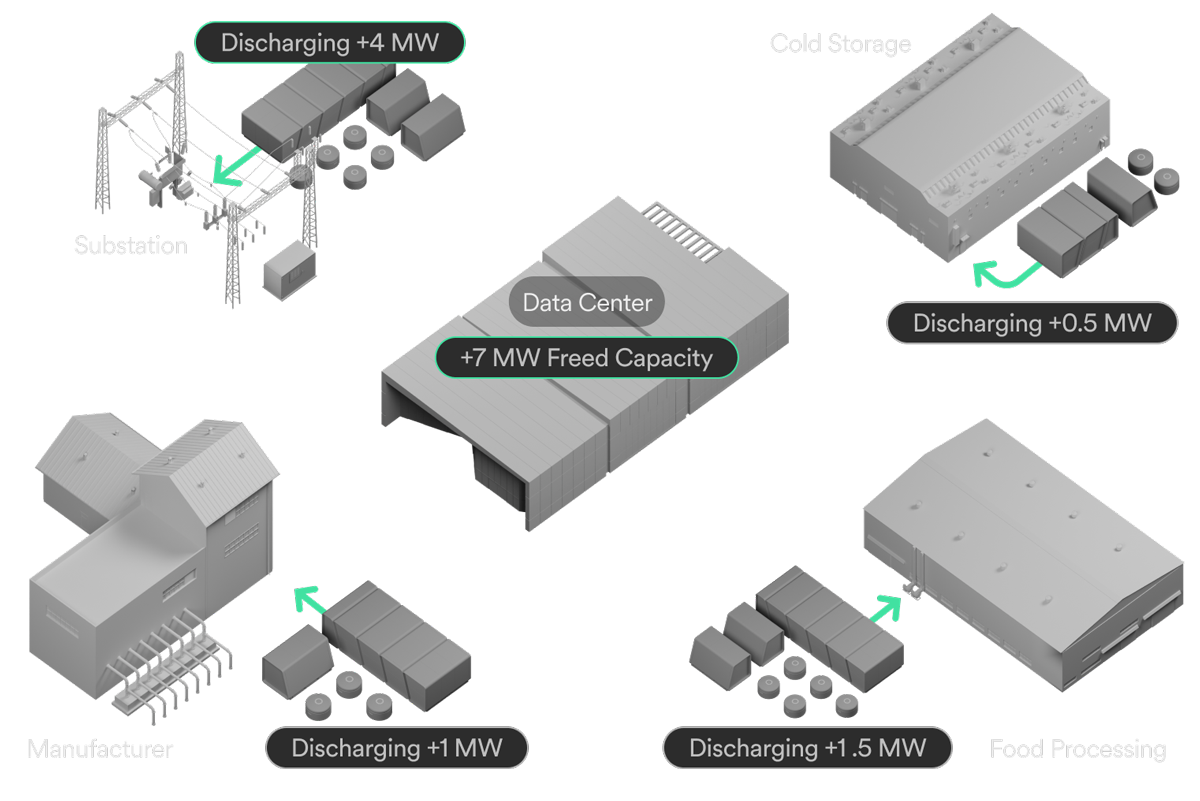
Grid-side deployments free capacity at the source
Torus partners with utilities to install storage at substations and other large loads near the development site. This relieves congestion on the distribution network, freeing capacity that can be redirected to new data centers.
4
Construction timelines are expedited
Your project moves forward with the power it needs — behind the meter, at the grid level, or both. As utility service catches up, on-site storage transitions into revenue-generating grid services or supports other facility use cases.
The other power problems we solve for data centers…